Queer Exhaustion
Exploring the battle fatigue & burnout from living a queer life in the anti-LGBTQ+ quagmire of today...

I'm tired.
The kind of tired that sleep doesn't rectify. The kind of tired that seems to sit in my bones and curl up in my noggin. The kind of tired that forewarns of the modern phenomenon of burnout.
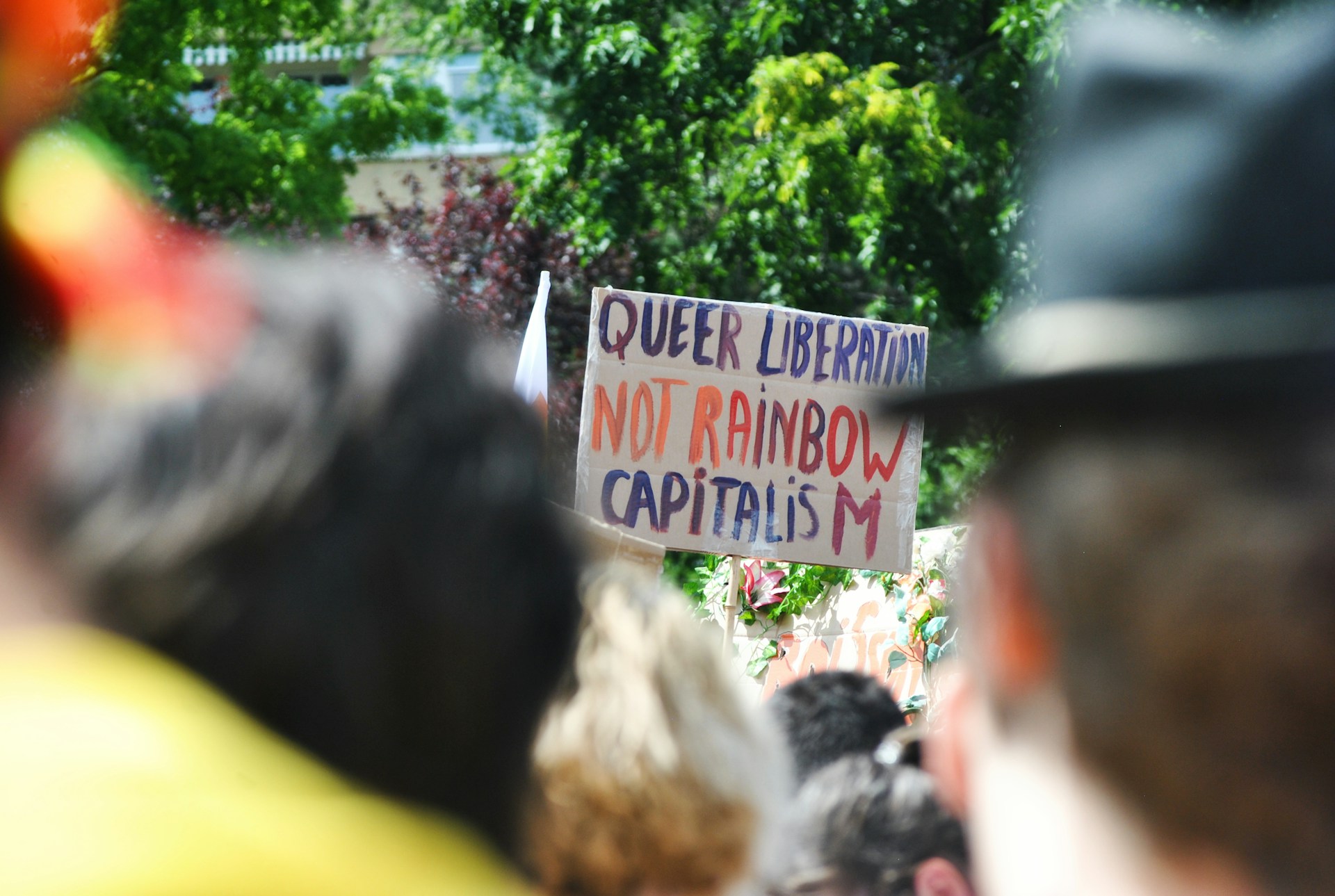
Burnout, in typical parlance, is understood as something that happens to folks unable to properly adjust a healthy, sustainable work-life balance. Capitalism, hustle culture, and the pervasive Puritanical work ethic ingrained in American concepts of labor coalesce into an environment that pushes people to the brink of collapse. (And certainly, this is not exclusively an American phenomenon; any society under capitalism can have workers suffer from burnout.) For many, survival may eclipse the ability to manage a healthy lifestyle. Living paycheck-to-paycheck means mental health days, rest, and needed downtime are costly endeavors. Eking out a living leaves little time for self-care.
But the tiredness I'm feeling isn't quite that quintessential corporate burnout. No—this is queer exhaustion.
There’s this thing that happens when your survival once depended on being likable, helpful, or “easy” to be around. You build a kindness reflex. You say “yes” before checking your own bandwidth. You go the extra mile because your self-worth is braided tightly with being needed.
But when you are chronically kind in a world that is systemically unkind to you, something breaks down. The kindness turns into a trap. You become a sponge for everyone else's pain—while your own gets pushed to the bottom of the inbox.
And the cruel irony? You’re often rewarded for it. Told you’re "so strong" or "such a light." Meanwhile, your inner world is dimming.
I can’t tell you how many times I’ve been praised professionally while privately unraveling.
If you’re queer, especially visibly trans or nonbinary, there’s a kind of internalized pressure to represent the community well. You want to be visible, but not too angry. You want to be authentic, but not make others uncomfortable. You want to be honest, but also strategic.
It’s a tightrope walk. And when your work is community-based or identity-affirming, boundaries become blurry fast. Clients become friends. Activism becomes identity. Rest starts to feel like betrayal. And all of a sudden, you’re out of energy—but still feeling like you owe everyone more.
That’s not advocacy. That’s martyrdom. And it’s killing us.
—Queer, Chronically Kind, and Constantly Tired: Burnout at the Intersections of Identity and Advocacy by Layne Hoffman
I've lived with mental illness nearly all my life. Chronic depression manifested during elementary school; an anxiety disorder cropped up during college; and ADHD went undiagnosed until I was in grad school. These various mental health disorders and neurodivergences intermingle with one another in my day-to-day life.
With so-called "invisible disabilities", however, comes the added pressure of outside judgement, misunderstandings, and the ever-dreaded accusation of laziness. (Truly one of my greatest fears is to be seen as a lazy person. Nightmare fuel to this day.) What energy I have, and what I'm able to do, may be different than that of a neurotypical person.
Add being queer into the psychic soup pot, and you've unlocked a real-life hard mode difficulty setting. (Ultra hard mode may be unlocked by trans neuroqueer people of color due to the mounting challenges of intersecting marginalized identities.)
I take some solace in the fact I am by no means alone in suffering from queer exhaustion. In fact, there is a higher prevalence of queerness and gender variance among neurodivergent people! The unique tightrope walk of living a visibly neuroqueer life while navigating mental health, financial stress, community, public safety, and hostile legislation is a burden with the density of a black hole.
Being visibly queer means openly confronting the sociocultural panopticon of gender; it means being placed under the hypervigilant scrutiny & judgement of a cisgender, heteronormative society that continues to define all else as other. As with any marginalized group, there is the pressure—as Hoffman noted in the earlier quote—to represent the community well when you exist in a majority space as the minimal, or only, member of a minority group.
I am aware that I am often the first non-binary person someone has met (especially for older folks outside of the LGBTQ+ community). With that comes the pressure that I must, somehow, act the part of diplomat for an entire identity group that is the furthest thing from a monolith. I must be gracious and patient and understanding—because if I am rude, or impatient, or less-than-ideal, a smear is wiped across gender variant folks in the mind of that stranger. I will have inadvertently contributed to the growing anti-LGBTQIA+ sentiment that hounds our culture and legislation to this day.
Is that a fair expectation? Absolutely not!
Does it nevertheless feel true and contain some modicum of truth? Yeah, unfortunately.
Especially because I myself have chosen to run this nonprofit and work with the public in an attempt to bolster education and outreach in Dracut and the Merrimack Valley.
So when I'm misgendered at work, I just smile and nod. I don't correct patrons—that would be time-consuming, exhausting, and invite conversations that are not necessary to the professional interaction. When co-workers, friends, or family misgender me, I might remind them that I exclusively use they/them pronouns (and have done so since coming out as non-binary in 2019). But I also might not, because in that interaction, I often have to soothe the other person's ego to reassure them that I don't think ill of them as a person because they accidentally misgendered me.
I receive psychic damage from social media as I try to sift through posts to share things that are relevant or helpful for the community. (I do not use social media in my personal life in order to protect some of my sanity.) On occasion, I may find a personal insult or threat in my inbox. (Block & report as needed.) When out in public alone, I often have moments of fear when confronted with strangers sporting accessories, clothes, or bumper stickers that promote homophobia and/or transphobia. The stranger may be perfectly fine as a human being, but their presentation alludes to the possibility that I am physically unsafe around them as a neuroqueer person.
The daily toll of keeping up-to-date with anti-LGBTQ+ legislation and rhetoric in this country cannot be overstated. I am deeply grateful to be from Massachusetts; that doesn't isolate me from the pain felt by those in other states and the very real problems persisting in the Commonwealth. (The disconnect between being in a state that recognizes my gender identity with a federal government that does not is a curious, uncomfortable thing. I still don't know what to do about renewing my passport.)

We’re here for you. Get immediate crisis support. Connect to a crisis counselor 24/7, 365 days a year, from anywhere in the U.S. via text, chat, or phone. Our trained counselors understand the challenges LGBTQ+ young people face. The Trevor Project is 100% confidential and 100% free.
There are some days when I have multiple projects I need to work on that I simply do not have the energy for. My ADHD impacts my executive functioning—the ability to plan, solve problems, and adapt to changes. Small tasks like cleaning the litter box ends up requiring the same amount of energy others may use to do a whole series of errands about town. Balancing my time between what I need to do, what I want to do, and what must be done is a perpetually-losing battle.
The wrench thrown into the mix, of course, is that depression and anxiety can alter my ability to accomplish tasks even further. While I am grateful to share that I haven't had a panic attack in some time, I can assert that such attacks are deeply draining and debilitating. It is an unpleasant full-body experience that cannot be reasoned with or "logicked" out of. On days where my anxiety or depression flares, doing self-soothing activities to busy my mind elsewhere might be all I can manage to do. (And then, of course, the activities meant to relax and center myself—playing video games, reading, watching a TV show with my spouse—turn into oxymoronic endeavors that look like relaxation while internally I berate myself for "wasting my time" or "procrastinating" thanks to the capitalistic myth of American bootstrapping and hustle culture that sticks in the craw of my subconscious.)
There is an additional side to queer burnout outside of the cisheteronormative framework: the aspect of queer performance within the queer community itself.
I've been out as bisexual since high school, and anyone who is bi, pan, or multi-sexual in orientation will know the frustration that comes with other queer community members invalidating fellow queer folks in "straight-passing" relationships. (Biphobia remains a persistent problem in the community.) There becomes the sense that one isn't queer enough to be a part of the LGBTQIA2S+ umbrella. You fear that your presence at Pride is tolerated rather than celebrated.
There is pressure in opposing invisibility of identity to constantly present and perform queerness for the sake of visibility. But that expectation of performance becomes burdensome and exhausting, especially as it veers away from authentic self-expression to self-sacrificial presentation.
Too queer for cishet society; not queer enough for the queer community; too neurodivergent for neurotypical society; not disabled enough for the disability community.
In summary: EXHAUSTING.

So how do I recover from queer exhaustion?
Well, it's a matter of symptomatic care first & preventative measures later. If you're presently suffering from queer exhaustion (like me), recognize where you're at and give yourself grace.
❥ Rest is not optional. Human beings are complex, social mammals; like any animal, we require rest and nurturance. For many, there is also a spiritual aspect to rest as well. Carve out time purposefully. Prioritize rest in whichever form fulfills you best.
❥ Boundaries are not weakness. Creating firm boundaries for ourselves helps safeguard our mental and emotional health. Boundaries can be interpersonal, professional, or physical. Saying no is not cruel; it's a matter of self-love for what you can handle, and respect for others by honestly sharing that your own plate is too full to properly handle some additional task or responsibility.
❥ Prioritize your own safety & well-being. If you find it difficult to put your own needs first, try to enlist the help of a loved one—a partner, a parent, a friend, or a trusted co-worker—to remind you to practice some self-care. LGBTQ+ folks often experience a level of underappreciation in professional settings and heightened scrutiny in public places. Recognize these additional stressors! You deserve to be safe and secure in your visibility, and it is okay to strategically withdraw from the spotlight to preserve your own mind and body.
❥ Queerness isn't about suffering. Too often, the media loves tragic narratives when it comes to LGBTQIA2S+ folks. Our own humanity is frequently challenged and we are then tasked with mining our trauma to prove our worthiness before our peers. Remember: you deserve gentleness & kindness; you deserve self-love and joy; you deserve a chance to heal and grow. You deserve queer joy!
❥ Honor your humanity. We all have finite time on this beautiful planet. You are not a resource to be exploited! You are a whole, unique person who deserves dignity and respect. Your time is valuable.
❥ Reconnect with your environment. Disconnect from the 24/7 rage-fueled news cycle. Monitor your social media use and determine what brings you joy and what brings you anxiety. Use focus apps to help keep yourself from doomscrolling. Engage with local community events. Visit the library. Take a walk at a park. Call a friend for a chat. Rein in the hyper-connectivity of this digital age to ground and center yourself in your own sociocultural ecosystem.
❥ Ask for help. Whether from a co-worker, a therapist, a family member, a partner, or a friend—we all need help. Hyper individualism tries to make islands of us all when we are innately communal beings. It takes a village is a statement, not a suggestion. Many people are willing to help; they just might not know what kind of help you need. If you don't know what help you need, try just talking things out with someone you trust who is a good listener.
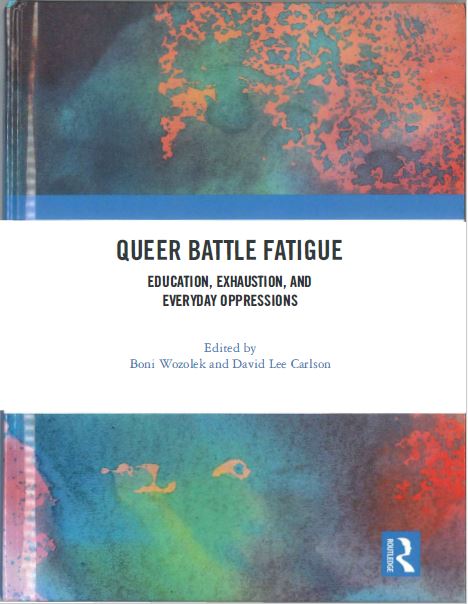
Queer exhaustion is a unique branch of the burnout experience. It stems from the mounting challenges of navigating day-to-day life in environments that range from unhelpful to downright hostile. It takes time and concerted effort to care for oneself in a way that preserves one's mental health while living in a way that benefits our own communities.
It is okay to be tired and angry and anxious and scared. It is okay to feel frustration and fear. It is okay to be messy and imperfect—that makes you perfectly human!
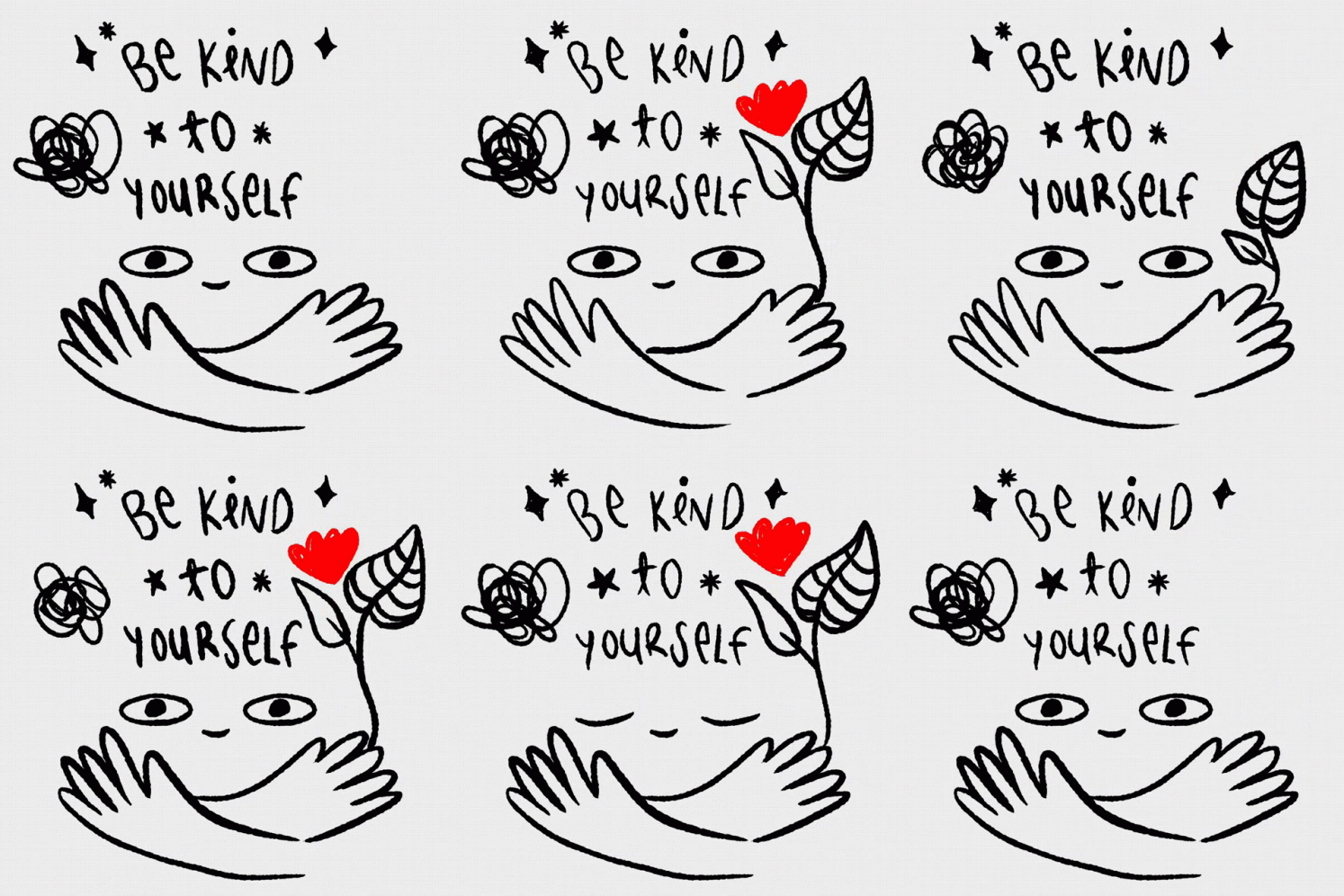
Know that exhaustion, of all kinds, is temporary. It is a state we sometimes find ourselves in, and it is one we will find ourselves moving away from in due time with due effort. For my fellows who find themselves struggling with queer exhaustion like me: I see you; I love you; and I demand that you be kind to yourself today!
—RESOURCES—
 Jesse Bosse
 Douglas Mitchell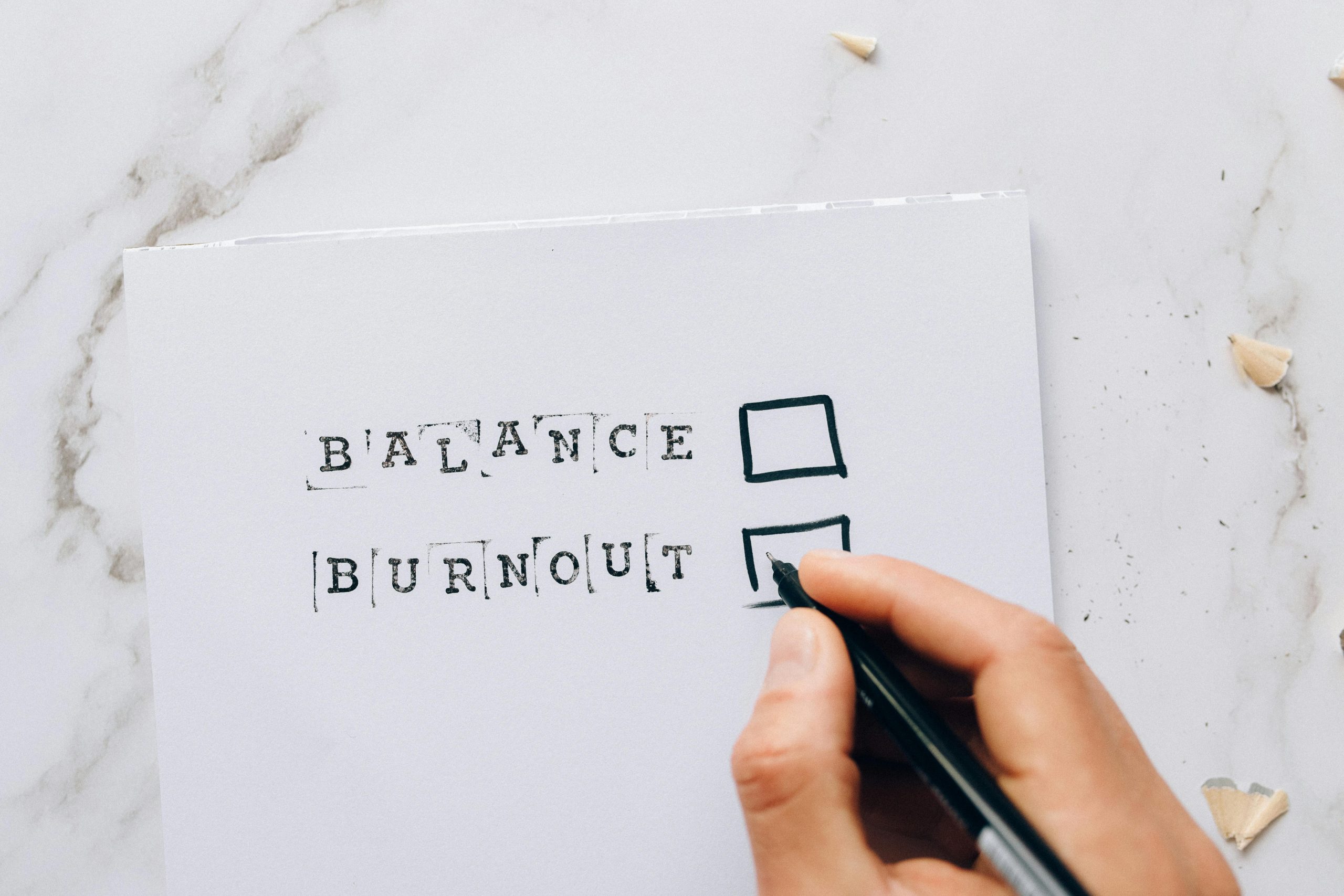
 Simon Bakke