What is Gender-Affirming Care?
A basic primer for anyone who wants to understand what gender-affirming care is, how it works, & what we can do to protect healthcare access for trans & nonbinary youth.


There is a lot of misinformation floating around about gender-affirming care—especially when it comes to discussing such healthcare for minors. We here at Rainbow Dracuteers have created this basic primer to accurately outline what gender-affirming care is, what it looks like for different age groups, and why it's so important to safeguard access to such care. Along the way, we'll address common myths or misconceptions about gender-affirming care for minors. So, without further ado:
What even is gender-affirming care???
Gender-affirming care is the umbrella term for any form of care enacted to support & affirm an individual's gender identity. This care can take many forms, including "social, psychological, behavioural or medical (including hormonal treatment or surgery) interventions" (WHO) performed in service of the health & well-being of the individual. It is a holistic, multi-disciplinary approach designed to improve the quality of life for someone who needs additional help feeling at home in their own body & their own community.
Although discussed almost exclusively in regards to trans youth & gender-diverse patients, nearly every individual accesses various forms of care that can reasonably be recognized as gender-affirming. Cisgender men accessing treatment for hair loss, erectile dysfunction, jaw recontouring, or breast reductions are, in fact, accessing services to affirm their embodied identities as men. Cisgender women are often inundated with marketing to make themselves feel more "feminine" and may seek treatments for body hair removal, post-menopausal hormone replacement therapy (HRT), mammoplasty, birth control, or regular nail care to affirm their embodied identities as women.
Gender-affirming care often goes unrecognized when it's geared towards cisgender patients aligning their gender expression with traits typically associated with their assigned sex. Gender-affirming care only seems to meet friction when in conversation with transgender, nonbinary, and gender-diverse folks seeking bodily autonomy equivalent to their cis neighbors. This is an especially galling obstacle when one considers how gender-affirming care has clinically shown itself to be one of the best ways to decrease depression and suicidality in trans youth.
Get the Facts on Gender-Affirming Care | Human Rights Campaign

We’re here for you. Get immediate crisis support. Connect to a crisis counselor 24/7, 365 days a year, from anywhere in the U.S. via text, chat, or phone. Our trained counselors understand the challenges LGBTQ+ young people face. The Trevor Project is 100% confidential and 100% free.
Supporting Youth with Gender Incongruence & Gender Dysphoria
When discussing support for trans, nonbinary, and gender-diverse folks using a medical model of understanding, the diagnosis of gender dysphoria will often come up. Gender dysphoria is a psychiatric diagnosis for a patient who experiences long-term, persistent incongruence between their gender identity and the gender typically associated with their assigned sex at birth. The old-fashioned way some folks tried to express this notion was the idea of "a person's brain in the wrong body" to try and get across what the lived experience is like for someone suffering from gender dysphoria. It isn't typically a belief that someone's body is literally born wrong, but rather a metaphor to impart to others the great amount of discomfort involved.
The experience of gender dysphoria encompasses depression, anxiety, and dissociation inextricably linked to a disconnect between a person's internal sense-of-self or identity and the way one's self is perceived by others. The pain of this incongruity can escalate to places of self-harm, suicidal ideation, and suicide. Through clinical trials, studies, and medical best practices refined over decades, researchers have found gender-affirming healthcare to be the best treatment for a patient suffering from gender dysphoria. This healthcare is a framework, rather than a one-size fits-all treatment.
No matter your age, proper gender-affirming care involves multiple disciplines to best support you. Psychiatrists, mental health therapists, endocrinologists, primary care physicians, and for minors, pediatricians, are just some of the medical experts that come together to improve your quality of life as a gender diverse person.
For young children, the focus will solely remain on social transition & gender affirmation. Children as early as one begin having a basic understanding of gender, and by age four, many have an understanding of their own gender and selfhood within their dominant culture. All kids can play with gender expression; the feelings and authenticity of day-to-day gender incongruence is what sets apart a trans child with other children who might just be playful with gender or don't conform to stereotypical gender norms.
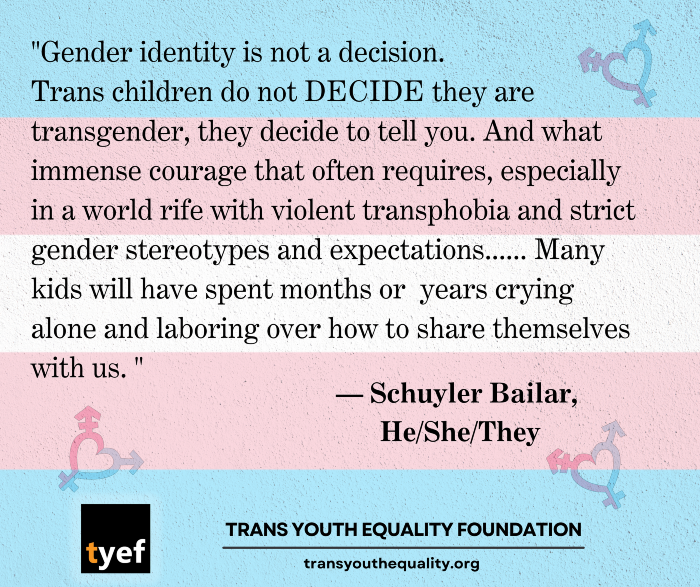
A trans child may go by a chosen name and may start to express their gender in a way different from the gender associated with their assigned sex. This stage of gender-affirming care is all about support, love, and affirmation. The trans kid should be allowed to flourish in a safe, welcoming environment that let's them grow up and play and enjoy the typical messiness of childhood. The best clinical signs of quality-of-life improvement for trans youth and gender diverse minors comes from being in a supportive home environment. Organizations like Mama Dragons and Free Mom Hugs are pro-LGBTQ+ groups dedicated to showing up for our queer youth with fierce love and acceptance that echoes the need to keep children's homes safe and supportive.
Once the onset of puberty approaches, the next question of gender-affirming care will consider GnRH agonists (colloquially referred to as "puberty blockers"). This medication effectively "pauses" puberty for the duration of the medical regiment–typically 1-3 years. It is reversible. It has been used for decades to safely treat cisgender children suffering from precocious puberty. For gender variant children, puberty can be a devastating experience. Hormone production begins development of primary and secondary sex characteristics in the adolescent. Testosterone radically changes the body in irreversible ways, including vocal chords. Estrogen and progesterone contribute to the development of breasts and may trigger menarche (first menstruation). For trans children with gender dysphoria, puberty is not just the usual fraught fare but unrelentingly painful. The symptoms of gender dysphoria–depression, anxiety, dissociation, suicidality–may grow in severity if puberty is undergone in a way that furthers the incongruence of the minor's body and the minor's gender identity.
Puberty blockers are a safe, healthy way to give the young gender variant person some time to further mature and understand themselves as they enter teenagedom.
 McElroy Family
In this stage of young adulthood, the trans patient may consult with their doctors and their caregivers regarding the possibility of starting hormone replacement therapy, or HRT, to undergo the puberty aligning with their gender identity. This decision is a personal one that deserves to be made by the patient in conjunction with their expert care team and loved ones. Some gender variant kids may feel comfortable resuming their body's natural puberty and cease taking puberty blockers. Others may pursue HRT with informed consent to help their body align with their gender identity and self-expression.
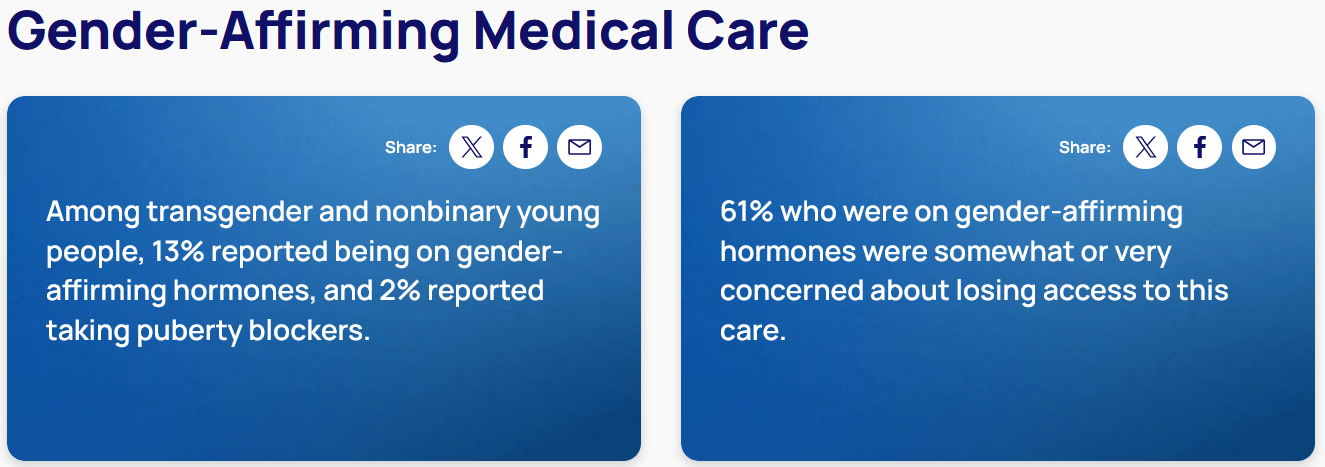
What hormones are taken, if any, will be carefully considered by an endocrinologist. Often, testosterone is taken as a masculinizing hormone, while estrogen is taken as a feminizing hormone. Some who may not want an overly drastic change may choose to microdose hormones for a subtle effect on appearance and voice. While some changes the hormones bring—like puberty itself—are irreversible, there are a variety of effects that do diminish once an individual stops HRT. This is one reason why trans adults who successfully treat their gender dysphoria with HRT need stable, safe access to medication on a regular basis.
One of the last major healthcare decisions a trans or gender diverse person usually makes as they enter adulthood is whether or not to pursue gender-affirming surgeries.
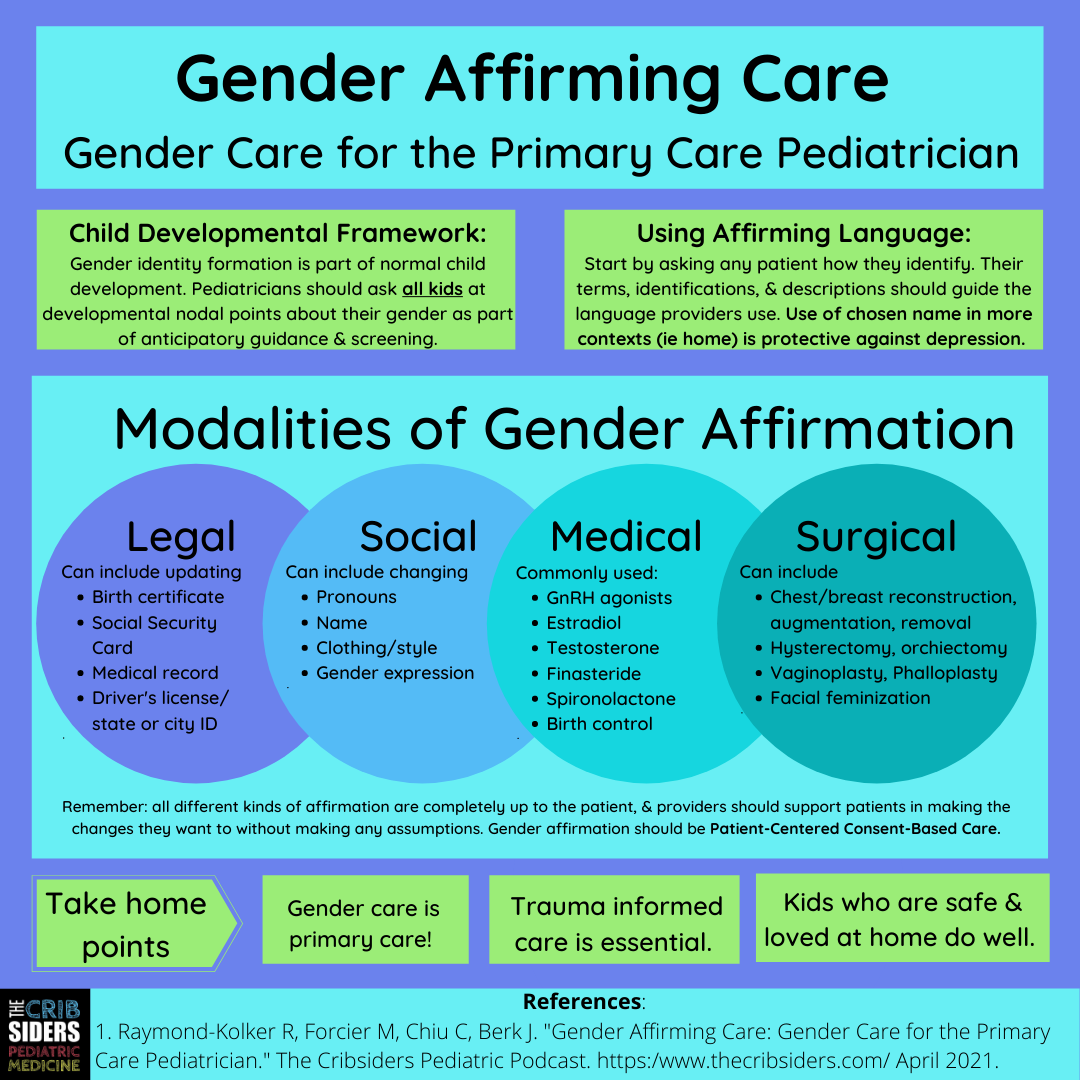
Not every trans, non-binary, or gender variant person will want or need surgeries. Being trans does not require surgical alteration of the body. For many, however, there are a variety of gender-affirming surgeries that may further alleviate gender dysphoria. Some transgender patients report that their gender dysphoria vastly diminishes, or even nearly vanishes, after receiving the proper gender-affirming surgeries for them.
Prior research shows gender-affirming surgeries are both safe and positively received by patients. Post-surgical complication rates are similarly low among transgender and cisgender people receiving the same type of surgery — if not lower among transgender people. And satisfaction with gender-affirming surgeries is high, including for chest/top surgery, bottom/genital surgery, and facial surgery.
Transgender and non-binary people typically do not have gender-affirming surgeries before the age of 18. In some rare exceptions, teenagers under the age of 18 have received gender-affirming surgeries in order to reduce the impacts of significant gender dysphoria, including anxiety, depression, and suicidality. However, this is limited to those for whom the surgery is deemed clinically necessary after discussions with both their parents and doctors, who have been consistent and persistent in their gender identity for years, have been taking gender-affirming hormones for some time, who have undergone informed consent discussions and have approvals from both their parents and doctors and who otherwise meet standards of care criteria (such as those laid out by WPATH).
It is also exceedingly rare: In one study that conducted a retrospective chart review of a U.S. national pediatric surgical database, authors were only able to identify 108 trans minors who had received any form of gender-affirming surgery over four years (2018-2021) — accounting for 0.04% of all transgender youth nationwide. Only 10 of these patients were under the age of 16. And approximately 95% of these surgeries were chest surgeries. In all cases, regardless of the age of the patient, gender-affirming surgeries are only performed after multiple discussions with both mental health providers and physicians (including endocrinologists and/or surgeons) to determine if surgery is the appropriate course of action.
Source: Gender Affirming Care 101– What is gender affirming surgery? Published by the Human Rights Campaign
Let's Review!
Gender-affirming healthcare is evidence-based and life-saving for trans, nonbinary, and gender diverse people.
This care is applied to queer adults or youth with gender dysphoria to improve their quality of life and address symptoms of depression, anxiety, dissociation, and suicidal ideation.
The provided healthcare is conducted by a multi-disciplinary team that takes a holistic approach to the physical, mental, and emotional well-being of the patient at each stage of cognitive development.
Young children do not receive any medical or surgical intervention. Caring for trans kids is focused on social transition & affirmation in a loving, supportive environment.
Adolescents beginning puberty may consider GnRH agonists ("puberty blockers") to pause the puberty process and prevent the irreversible changes brought to primary and secondary sex characteristics by pubescent hormone production. This medication is reversible and safe, sharing treatment with minors suffering from precocious puberty or endometriosis.
Trans, nonbinary, and gender variant teenagers may decide to pursue hormone replacement therapy (HRT) to undergo the puberty aligning with their gender identity. This treatment is conducted by a multi-disciplinary care team headed by an endocrinologist. At all times, care is guided by informed consent of the young patient and their caregivers.
Gender-affirming surgeries are options gender diverse patients may look to upon entering young adulthood. Not all trans or nonbinary individuals may seek surgery; their gender identity remains valid regardless of medical procedures pursued. For those who seek surgery to further alleviate the gender incongruence between their identity and their body, the gender-affirming procedures have a high rate of success and patient satisfaction, with many saying their gender dysphoria severely diminishes after surgery.
Only in the rarest of cases are surgeries even considered for teenagers suffering from severe depression and suicidality due to gender dysphoria. In these rare cases, gender-affirming surgery is life-saving. It is not easy nor trivial to pursue such care. These decisions, as always, are made with serious deliberation, expert medical criteria, consultations with the minor's caregivers, and informed by the self-determination of the patient.
Even for transgender adults, seeking and obtaining gender-affirming surgery is a lengthy, complicated process. The U.S. healthcare system, at all levels, is mired in draconian bureaucracy, labyrinthine insurance policies, financial stress, convoluted systems, and stunted accessibility. Due to ongoing legislation, anti-trans bills, statewide bans on gender-affirming care, and social stigma surrounding transgender, nonbinary, and genderqueer individuals, receiving the gender-affirming surgeries you need can take years rather than months.
The goal of all gender-affirming healthcare is the same as all healthcare: to help a patient achieve the greatest quality of life possible with their health, body, and self-determination in mind.

Help Protect Healthcare Access for Trans Youth
There are currently two proposals by the federal government that would severely restrict or ban gender-affirming care for certain minors and punish medical providers that offer life-saving gender-affirming care for youth. Rainbow Dracuteers issued a statement regarding these proposals when the Comment Period for them began. A copy of our statement will be quoted below.
We ask readers to leave a message on the Federal Register to condemn these proposals and support the right for trans youth to receive the best practices, evidence-based healthcare they deserve. To find out more information and find community with others looking to make their voice heard, MassEquality is hosting a hybrid event on Tuesday, February 10th at 6:30PM (tomorrow, as of this post's initial publishing) in Cambridge, MA and over Zoom: Public Comment Writing Event to Oppose Anti-Trans CMS/HHS Rules.

Our own statement regarding these federal proposals:
Every child deserves the best healthcare available to them—and that includes trans, non-binary, & gender diverse kids. Rainbow Dracuteers strongly opposes the callous new proposals by the U.S. government (1) to block gender-affirming care for transgender youth on Medicaid or CHIP and (2) to punish hospitals and care providers who offer such life-saving care for trans youth by threatening to pull Medicare and Medicaid funding from such establishments altogether.
Gender-affirming care is safe, evidence-based best practices for transgender & gender diverse youth recognized and approved by such organizations as the American Medical Association, American Academy of Pediatrics, & the Society for Adolescent Health and Medicine. The anti-trans rhetoric suffused in the vitriolic political stage of today is borne from misinformation, disinformation, and bigotry pedaled by anti-LGBTQ & anti-science pundits.
Transphobia & transmisia is the hate du jour for rage-baiting entrepreneurs profiting from the targeted harassment of a small, marginalized community. There is a perverse obsession with trans kids, trans people, and trans bodies rooted deep in the cruel politics of today. Many are trying to legislate the erasure of transgender & non-binary folks from public life.
But we know better: trans people, of all ages, are not new, not dangerous, and not confused. What is new is the internet age, filled with its beautiful capacity for free access to knowledge & its dangerous capacity for fueling division.
Help protect access to life-saving healthcare for transgender youth: submit comments to the U.S. government condemning these two proposals. Stand up for trans & gender diverse youth. Stand up for the doctors and healthcare providers working hard to give their young trans patients the best evidence-based care possible. The Public Comment Period on the Federal Register is live now until 5PM EST on February 17th, 2026.
RESOURCES
Association of American Medical Colleges: "What is gender-affirming care? Your questions answered" by Patrick Boyle, AAMC News Senior Staff Writer | April 12, 2022
 Loyal | thisisloyal.com
 Carla K. Johnson, Associated Press
 De Elizabeth
 Boston Spirit
 Samantha Riedel
 Name *
 Orion Rummler, Kate Sosin
Human Rights Campaign on Protecting Trans Youth Healthcare:
"The federal government has proposed two new rules that could make it virtually impossible for transgender youth to get the health care they need. These proposed rules would:
- Block Medicaid and CHIP funding for gender-affirming care for transgender youth; and
- Punish hospitals and providers that offer this care by threatening their ability to participate in Medicare and Medicaid altogether.
If finalized, these rules would block hospitals and doctors from providing gender-affirming care to youth across the country. They would also take away public funding like Medicaid and CHIP from kids who rely on that coverage to access best practice, medically necessary care.
Furthermore, not only would these proposals restrict youths’ access to gender-affirming care in the Medicaid and CHIP systems, but because almost every hospital in America receives this funding alongside Medicare, every one of them would have to cut off access to that care to continue receiving federal funding for other patients. This will impact all families seeking care for their trans children, regardless if they are doing so with public insurance, private insurance, or their own funds.
These rules are not final yet — and we have a chance to stop them. You can help by sending a public comment no later than 5 p.m. on February 17, 2026. Tell the government why this care matters and why these rules would hurt young people. Comments are due within the next 60 days and will not be reviewed if submitted after the deadline, so please act soon."